JDIEG
JOURNAL
Journal of Digital Intelligence and Economic Growth
Print ISSN: 3058-3535
Online ISSN: 3058-6518
Journal Co-hosts the China-Korea Economic Development Conference: Restructuring the Global Economic Order: Challenges and Opportunities for the Asia-Pacific
The 2025 China-Korea Economic Development Forum opened on October 24 in Jeju Island, South Korea, and will run for three days until October 26. The forum's core theme is "Restructuring the Global Economic Order: Challenges and Opportunities for the Asia-Pacific." The forum will focus on the macroeconomic backdrop of profound adjustments in the global landscape and rising global uncertainty, exploring how the Asia-Pacific region can address downside risks such as unilateralism and supply chain disruptions, and how to leverage regional integration and innovation to find new opportunities and explore new paths for development.
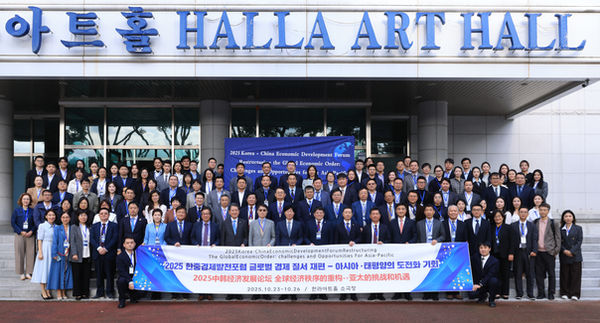
Scene of the 2025 China-Korea Economic Development Forum
The restructuring of the global economic order has become a central issue in the current evolution of the world economic landscape, profoundly reshaping regional development pathways and the logic of international cooperation. Despite the complexities and uncertainties brought by factors such as adjustments in the global governance system and geopolitical-economic dynamics, economic and trade cooperation among Asia-Pacific nations has maintained a steady growth trajectory. The continuous efforts of all parties in areas such as policy coordination and the improvement of regional collaborative mechanisms have consistently fueled strong vitality, enabling joint responses to the challenges arising from this restructuring and unlocking new opportunities for development in the Asia-Pacific.
Against this backdrop, how to accurately position themselves amid the wave of restructuring the global economic order—both firmly seizing the opportunities for Asia-Pacific cooperation and effectively addressing potential risks—has become a key issue for Asia-Pacific countries in deepening practical collaboration. Centered precisely on this core theme, the 2025 China-South Korea Economic Development Forum will focus on exploring how to transform the challenges of order restructuring into drivers of development. This will be achieved by enhancing regional synergy in the Asia-Pacific, strengthening the resilience of industrial and supply chains, and refining regional governance rules—ultimately aiming not only to upgrade multilateral cooperation but also to boost the region’s overall global competitiveness.
This forum is jointly hosted by the Korea Economic Outlook Network, the Korean Economic Association, Peking University, Jeju Halla University, the Korea Development Institute (KDI), the Korea Institute for Industrial Economics and Trade (KIET), the Asia-Pacific Business and Economics Association, Kyonggi University, Zhengzhou Business University, Zhejiang Shuren University, the Institute of Chinese Humanities and Social Sciences at Kookmin University, and the Journal of Digital Intelligence and Economic Growth (JDIEG). It is supported by the Embassy of China in the Republic of Korea, the Representative Office of the China Council for the Promotion of International Trade (CCPIT) in Korea, the Trilateral Cooperation Secretariat among China, Japan, and the ROK, the Jeju Special Self-Governing Province of Korea, and the Korea-China Chamber of Commerce. The event is organized by the China-South Korea Economic Development Research Institute and Fenhan Wang, with co-organization by Seoul National University, Shandong University, the Charhar Institute, the Peking University Market Economy Research Center, the Industrial and Commercial Bank of China Seoul Branch, the China Construction Bank Seoul Branch, the Oriental Beauty Valley Korea Center, Korea Yunda Express, Jiangsu Anlifeng Holding Group, Harmony Auto, and THE Huaying Association. Phoenix News, Fenhan Wang, and Wall Street Tech Eye serve as media partners.
The forum features a comprehensive agenda, including an opening ceremony, five thematic roundtable discussions, a series of academic forum events, and a closing ceremony, forming a complete and well-structured program. Scholars from prestigious universities both in China and abroad, such as Peking University and Kyonggi University, gathered to participate in the discussions. Among them, Kyonggi University, leveraging its profound expertise and strong capabilities in the field of international management, played a leading role in shaping the forum’s agenda, highlighting its academic leadership.
The forum officially commenced at 7:30 AM Beijing Time on October 24. During the opening session, opening remarks were delivered by Kim So-young, Representative of the Korea Economic Outlook Network, Professor at Seoul National University, and former Vice Chairman of the Financial Services Commission of Korea; Dong Zhiyong, Vice President of Peking University; and Lee Geun, President of the Korean Economic Association, Emeritus Professor of Seoul National University, and Distinguished Professor at Chung-Ang University. Welcoming remarks were given by Kim Seong-hoon, President of Jeju Halla University, and Chen Jianjun, Consul General of the Consulate General of the People's Republic of China in Jeju. Congratulatory speeches were then delivered by Jo Dong-chul, President of the Korea Development Institute (KDI); Kwon Nam-hoon, President of the Korea Institute for Industrial Economics and Trade (KIET); and Yan Liang, Deputy Secretary-General of the Trilateral Cooperation Secretariat among China, Japan, and the ROK, marking the official start of the forum.
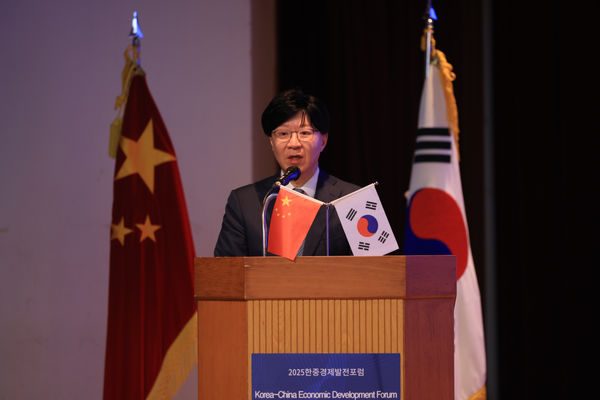
Kim So-young, Former Vice Chairman of the Financial Services Commission of South Korea
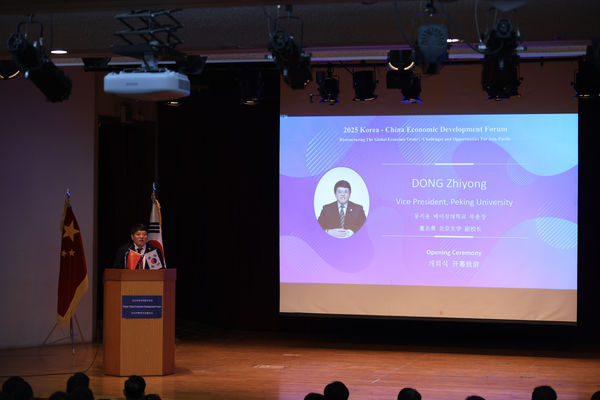
Dong Zhiyong, Vice President of Peking University
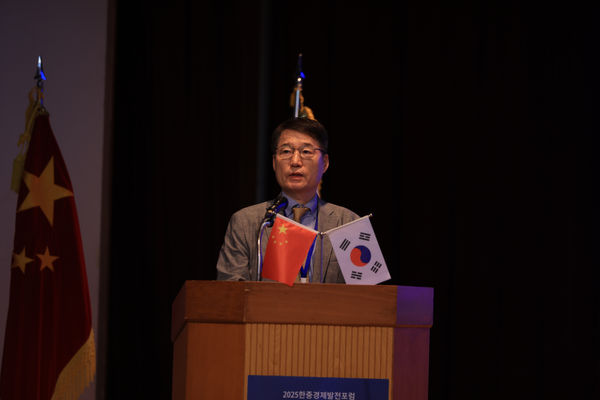
Lee Geun, President of the Korean Economic Association, Professor Emeritus of Seoul National University, and Specially Appointed Professor of Chung-Ang University
The forum featured five roundtable discussions, each centered on one of the following core themes: "Restructuring of the Global Economic Order and the Strategy of the Asia-Pacific Region," "Financial Connectivity in the Asia-Pacific and the Regulation of Asia-Pacific Stablecoins," "Manufacturing Development in the Asia-Pacific and Regional Supply Chain Restructuring," "Sustainable Cooperation and Development in the Asia-Pacific Region," and "Industrial Collaboration Between China and South Korea."
Chinese and South Korean experts and scholars actively participated in the discussions across all sessions, engaging in lively on-site exchanges. The scholars focused on the opportunities for the Asia-Pacific amid global economic transformations, delving deeply into key areas such as the deepening of RCEP, building resilient supply chains, green and low-carbon cooperation, and industrial synergy between China and South Korea. Their insights provided valuable recommendations for regional economic development.
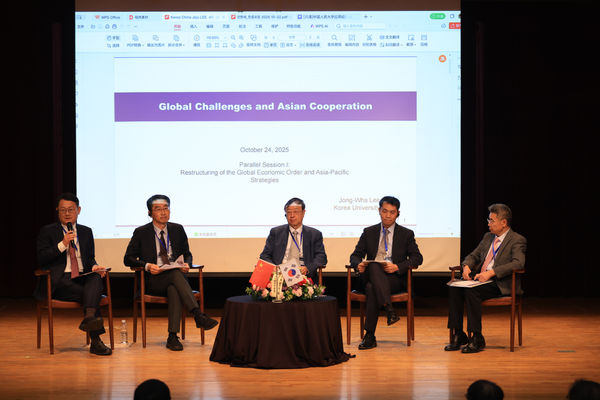
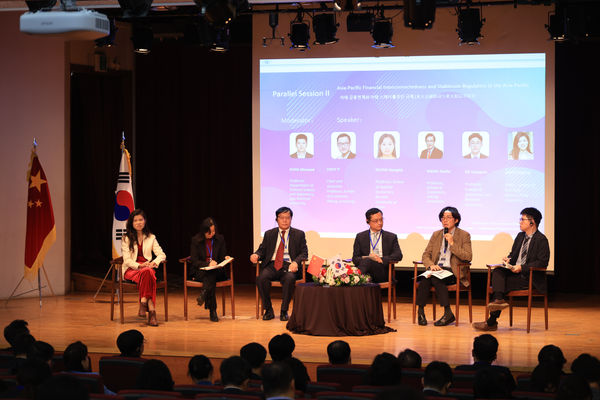
Participation of Experts in the Discussion
On October 25, the academic series of events of the forum will be held in Jeju in an orderly manner. That afternoon, the Council Meeting of the Asia-Pacific Business and Economics Association will also convene as scheduled, where representatives will provide insights and suggestions on regional business and economic collaboration as well as academic development.
On October 26, the forum will hold its closing ceremony, drawing a successful conclusion to this series of academic activities on China-South Korea economic development.
Amid the profound restructuring of the global economic order and the intertwined opportunities and challenges in the Asia-Pacific, regional synergy and cooperation have become a crucial link connecting different countries and regions to jointly address the reshaping of the global order. The 2025 China-South Korea Economic Development Forum brought together global experts, scholars, policymakers, business leaders, and representatives from related fields. Centered on the core context of global economic order restructuring, the forum delved into how the Asia-Pacific region can break down collaboration barriers through policy coordination, address cooperation challenges through industrial chain synergy, and leverage regional collaboration as a core supporting force in unlocking developmental potential and resisting external risks.
Through in-depth exchanges and consensus-building during the forum, the foundation for economic integration in the Asia-Pacific region will be further solidified. Moreover, it will inject substantive momentum into enhancing the region’s voice in the restructuring of the global economic order and advancing the construction of an Asian economic community, thereby helping the region seize the initiative for development within a complex and ever-changing global landscape.